
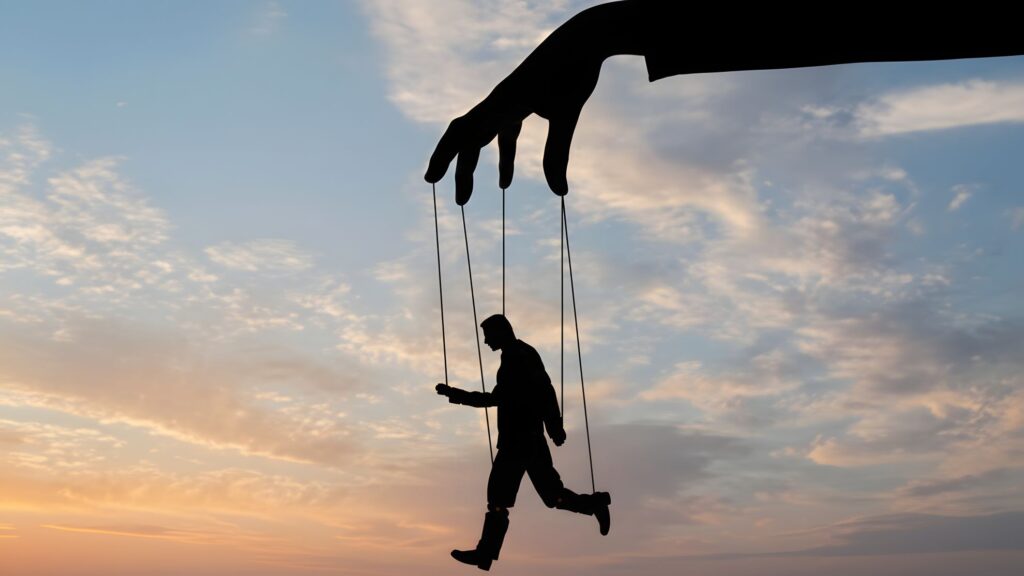
There is a particular kind of exhaustion that comes not from trying too little, but from trying too hard in the wrong direction.
If you have ever made a firm decision to change something in your life, felt genuinely motivated and ready, and then watched yourself gradually return to exactly the same patterns you were trying to leave behind, you will know this feeling. And if you have ever concluded from that experience that there must be something wrong with you, that other people manage to change and you simply cannot, that your failure to break through is evidence of some fundamental inadequacy, then this piece is written for you.
Because the science says something very different. Persistent difficulty with change is not a character flaw. It is not evidence of weakness. It is, in most cases, the entirely predictable result of using the wrong tool for the job. And the most commonly recommended tool, the one we reach for by default, happens to be the one that the research consistently shows is the least effective.
That tool is willpower.
What Willpower Actually Is (and Why It Keeps Letting You Down)
Willpower is the effortful, conscious suppression of one impulse in favour of another. It feels like gritting your teeth and pushing through. It feels like self-discipline and determination. And in small doses, in low-stakes situations, it works reasonably well. Resisting a second biscuit when you are not particularly stressed or hungry is something that willpower can manage.
But for the deeper changes most of us actually want to make, the ones that involve emotional patterns, longstanding habits, addictive behaviours, or the way we show up in relationships, willpower is fundamentally mismatched to the task. And there is a neurological reason for this, not a moral one.
Roy Baumeister, a social psychologist at the University of Queensland, spent years researching what he called ego depletion: the finding that willpower operates like a limited resource that is used up over the course of a day. The more decisions you make, the more stress you absorb, the more you resist your impulses, the less capacity you have left for the next act of self-control. This is why most people find that their resolve tends to crumble in the evenings, when they are tired and the day’s demands have been absorbed. It is not weakness. It is biology.
“Willpower is not a character trait. It is a finite cognitive resource that gets depleted by the very conditions that tend to make change feel most urgent.”
But Baumeister’s depletion model, while useful, does not tell the whole story. The deeper problem with willpower as a change strategy is what happens in the brain when we are under stress or feeling threatened in some way.
The Brain Under Threat Cannot Think Its Way to Change
When your nervous system perceives threat, whether that is a physical danger, an emotionally charged situation, or even the discomfort of trying to behave differently from how you have always behaved, something important happens. The parts of your brain responsible for quick, reactive responses become highly active. The parts responsible for considered decision-making, flexible thinking, and long-term planning become less available.
This is not a flaw in human design. It is exactly what the nervous system was built to do. In a moment of genuine danger, you need to react quickly, not to weigh up options. But the system that evolved for physical threat has a significant limitation: it cannot reliably distinguish between the threat of a predator and the discomfort of doing something unfamiliar and emotionally difficult.
What this means in practice is that attempts to change behaviours that are rooted in stress, emotional pain, or established threat responses are undermined by the very same nervous system responses they are trying to address. You cannot think your way out of a state that the thinking brain did not create. You cannot force your way through a response that the body is generating automatically, beneath the level of conscious control.
“The nervous system does not distinguish between physical danger and emotional discomfort. Both activate the same survival responses. And those responses, however helpful in a crisis, make sustained change extraordinarily difficult.”
This is why so many approaches to change, particularly those that rely on logic, positive thinking, or sheer determination, eventually run into a wall. They are addressing the surface of the problem while the root cause continues operating below it.
If you would like to understand more about how threat responses work in the nervous system and why they extend far beyond the familiar fight or flight response, our guide Threat Management Responses: Beyond the Limitations of Fight or Flight Threat Management Responses: Beyond the Limitations of Fight or Flight explores this territory in depth.

Why Some Changes Stick and Others Do Not
Here is something worth sitting with. Most people, if they look honestly at their own history, will find that they have changed in some areas of their life, even significantly, without particularly agonising over it. There may have been a relationship that shifted how they approached conflict. A experience that quietly altered their priorities. A period of life in which a habit they had carried for years simply became less compelling. These changes happened, and they often happened without sustained willpower being the driving force.
What distinguishes the changes that stick from the ones that do not is not the person’s moral fibre. It is the conditions under which the change was attempted.
James Prochaska, a clinical psychologist at the University of Rhode Island, spent decades studying how people actually change, not how they say they change, and not how therapists assume they change. His transtheoretical model, developed from research with thousands of people across many different kinds of change, identified something important: change is not a single event. It is a process that moves through stages, and each stage requires different things from us. Trying to take action before you are genuinely ready for it, which is exactly what willpower typically demands, is one of the most reliable ways to ensure that change does not last.
Prochaska’s research found something else that will feel familiar to many people: returning to old patterns is not failure. It is a normal, statistically expected part of the change process. Most people who make lasting changes cycle through the stages multiple times before a new behaviour becomes stable. Understanding this does not make the experience of setback pleasant, but it does remove the layer of shame that tends to make setbacks more damaging than they need to be.
The Role of Safety in Sustainable Change
One of the most consistent findings across the psychology of change is the role of felt safety. Not simply the absence of danger, but the active, physiological experience of being sufficiently secure to engage with something new.
Stephen Porges, an American neuroscientist whose polyvagal theory has had significant influence in clinical psychology, argues that the human nervous system needs to genuinely feel safe before it can access the capacities required for growth and learning. When safety is not present, the system defaults to protective responses, and those responses, however understandable, close down exactly the flexibility and openness that change requires.
This has a practical implication that often surprises people: working harder is frequently not the answer. Working in better conditions is. For many people, the conditions most needed for change include a degree of relational support, a reduction in background stress where possible, and a clear understanding of what the change process actually involves, so that the unfamiliarity of it does not itself become a threat.
“Change becomes possible not when we summon enough force to override our instincts, but when we create conditions in which our nervous system feels safe enough to try something different.”
What Good Strategies Actually Look Like
Understanding why willpower fails is the beginning. The more useful question is what works instead, and there is a good deal of evidence to draw on here.
Match the strategy to the stage you are in. Prochaska’s research makes clear that the strategy that works depends on where you actually are in the change process. If you are still weighing up whether you want to change at all, action-focused techniques will feel coercive and tend to backfire. If you have already committed and are in the middle of making changes, emotional processing and building new habits are more relevant than further deliberation. Applying the right tool at the right moment matters enormously.
Work with the body, not just the mind. Techniques that address the nervous system directly, including physical regulation through breathing, movement and sleep, have strong evidence behind them. The body is not a passenger in the change process. It is an active participant, and in many cases it needs to be the first thing addressed.
Understand what you are managing emotionally. Many persistent patterns that resist change are serving an emotional function: providing comfort, managing anxiety, creating a sense of control. Addressing the behaviour without addressing what it is doing for you tends to produce the experience of white-knuckling it, surviving the absence of the old behaviour but not genuinely flourishing without it. Our Five-Step Emotional Processing Model Five-Step Emotional Processing Model offers a structured, practical approach to understanding and working through the emotional underpinnings of difficult patterns.
Build in recovery, not just resistance. The research on willpower depletion suggests that recovery is not laziness. It is part of the mechanism. Protecting certain times of day, or certain domains of life, from the demands of change can actually improve outcomes across the board by ensuring that the capacity for self-regulation is not continuously depleted.
Expect non-linearity. If you return to an old pattern after a period of change, you have not gone back to the beginning. You have accumulated information, developed some new capacity, and experienced the possibility of doing things differently. That is not nothing. Treating a setback as the end of the journey, rather than as part of it, is one of the most common ways that people abandon processes that were actually working.
A Framework for Navigating Change More Effectively
Putting these principles together into a coherent approach to change is something that research supports and clinical practice refines. Rather than a single technique, what tends to work is a layered framework that distinguishes between different kinds of challenges, different stages of readiness, and different strategies suited to each.
Our Adaptive Change Model Adaptive Change Model offers exactly this: a hierarchical framework that guides you from understanding where you are in relation to a challenge, through to the specific strategies most likely to be useful at each level. It recognises that not all change is the same kind of problem, and that the difference between struggling and adapting is often a matter of approaching the right challenge with the right approach.
“Change is not a test of character. It is a skill. And like any skill, it improves substantially when you understand what you are actually doing and why.”
You Are Not the Problem
Perhaps the most important thing the science of change offers is not a technique. It is a reframe.
If you have tried and struggled, the most likely explanation is not that you are broken, or that you lack the fundamental qualities required for growth. It is that you have been attempting something genuinely difficult with a tool, willpower and force of will, that is poorly designed for the job. The nervous system you have is a human nervous system, doing what human nervous systems do under pressure. The patterns you are trying to change are patterns that developed for reasons, that made sense in their context, that served a purpose at some point even if they no longer serve you well.
Change is hard. It is hard for neurological reasons, developmental reasons, and relational reasons that have nothing to do with your worth or your capability. And it becomes significantly less hard, not easy, but genuinely less hard, when you understand what you are dealing with and approach it with the strategies the evidence actually supports.
If you would like to explore what that looks like in the context of your own life, we are here to help. On your terms, not the ones that have not been working.
Storms Edge Therapy works with adults navigating change, difficulty and recovery. To book an initial consultation or find out more about our approach, get in touch. get in touch.
Frequently Asked Questions
Is it normal to keep failing at the same things?
Very much so, and the word “failing” is worth questioning. Research by James Prochaska and colleagues found that most people who make lasting changes cycle through setbacks multiple times before a new behaviour stabilises. Returning to old patterns is a normal part of the change process, not evidence that change is impossible.
Why does change feel harder when I am stressed?
Stress activates the nervous system’s protective responses, which prioritise quick, familiar reactions over flexible, considered ones. This is a neurological process, not a character failing. It is why creating conditions of sufficient safety is often more effective than simply trying harder.
Does therapy help with this?
Therapy can be particularly useful for change that keeps stalling, because it addresses both the emotional underpinnings of the pattern and provides the relational safety that the nervous system needs in order to try something different. Approaches that work with both the mind and the body tend to produce the most durable results.
How is the Adaptive Change Model different from other self-help tools?
Rather than offering a single strategy for all problems, the Adaptive Change Model is a hierarchical framework that distinguishes between different kinds of challenges and matches different strategies to each. This means it can be applied usefully to a wide range of situations rather than working for some people and not others.