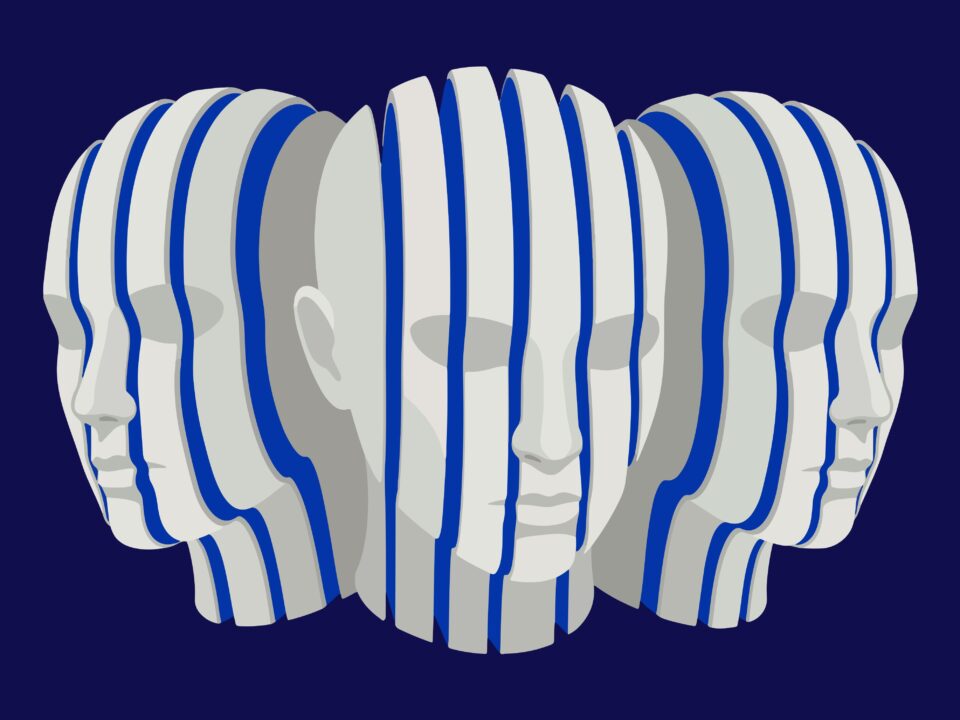
Two words get used almost interchangeably across therapy websites, LinkedIn posts and workplace training slides: neurodiversity and neurodivergent. Most people assume they mean roughly the same thing. At Storm’s Edge Therapy we’ve come to use them differently, and deliberately so. We want to explain why, because the distinction shapes how we work with clients and how we talk about the traits that bring people to us.
This is a proposal rather than a settled fact. Language around neurodivergence has multiple origins, several competing definitions and a genuinely contested history, so what follows describes how we use these terms in our practice, and why, rather than a claim that everyone else has got it wrong.
History of the Terms
Neurodiversity entered public use through Judy Singer’s 1998 thesis, though recent scholarship credits its development to the wider online autistic community of the 1990s, including Jim Sinclair and others who were already describing neurological difference as a form of human variation rather than a deficiency requiring correction. Singer originally applied the term narrowly, to autistic people with average or high measured intelligence. The word has since expanded well beyond that starting point, and its origins remain genuinely disputed among the people who built the movement around it.
Neurodivergent came later. Autistic activist Kassiane Lucas, writing at the time under the name Kassiane Asasumasu, coined it around 2000 as an umbrella adjective for anyone whose neurocognitive functioning diverges from dominant social standards of “normal”: autism, ADHD, dyslexia and many other conditions and differences, deliberately not limited to autism.
Psychologist Nick Walker later formalised much of the vocabulary now used across the neurodiversity movement. In his widely cited definitions, neurodivergent describes an individual, while neurodiversity describes a property that belongs only to groups, in the same way biodiversity describes an ecosystem rather than a single organism. On Walker’s account, an individual cannot be neurodiverse. They can only diverge.
We depart from that account in one specific respect, and we want to be upfront about it.
The Distinction That We Use
In our practice, neurodivergent refers to a diagnosable condition: autism spectrum condition, ADHD or ADD, dyslexia, dyspraxia, and comparable conditions that sit within psychiatric and neuropsychological classification systems. It’s a clinical term with defined criteria, assessment pathways and, for many clients, a formal diagnosis attached to it.
Neurodiversity, as we use it, describes something broader and doesn’t require a diagnosis. It refers to the full range of human cognitive profiles: how someone processes information, how intensely they register stimuli, how their attention, memory, creativity or reasoning are organised, measured against no particular clinical threshold, only the general spread of the population. Under this definition, someone can think in markedly unusual patterns without meeting the criteria for any diagnosable condition. Giftedness sits here for us more often than not: a distinct cognitive profile, sometimes an intense one, that doesn’t in itself indicate a disorder.
The practical difference is this. Neurodivergent tells you a diagnosis is present or diagnosable. Neurodiversity tells you a person’s thinking departs from typical patterns, and leaves open whether that departure has ever been, or needs to be, formally assessed.
Why We Think This Distinction Earns Its Keep
Without it, the two words collapse into each other and something gets lost. A client who has just discovered their thinking style is unusual, and hasn’t sought or received any diagnosis, can end up either underclaiming their experience, assuming it doesn’t count unless there’s a diagnostic label attached, or overclaiming it, adopting clinical language for something that was never a disorder in the first place. Neither serves them well.
The distinction also gives us better language for clients whose profile sits between the two categories. Someone can be gifted and neurodivergent, gifted without being neurodivergent, or neurodivergent without any measurable giftedness. All three are common among the people we see, and folding neurodiversity into neurodivergence tends to blur exactly the differences that make each client’s experience distinct from the others.
There’s a clinical reason for the split too. Assessment, diagnosis and access to certain accommodations depend on meeting defined criteria, and that process matters enormously for clients who need it recognised, whether for workplace adjustments, education, or simply to have years of self-doubt finally explained. Collapsing neurodiversity and neurodivergence into one word risks implying that self-identification and formal diagnosis carry the same weight. For some purposes they do. For others, particularly anything involving statutory support, they don’t, and clients deserve language that reflects that difference honestly.
Twice Exceptional: Living in Both
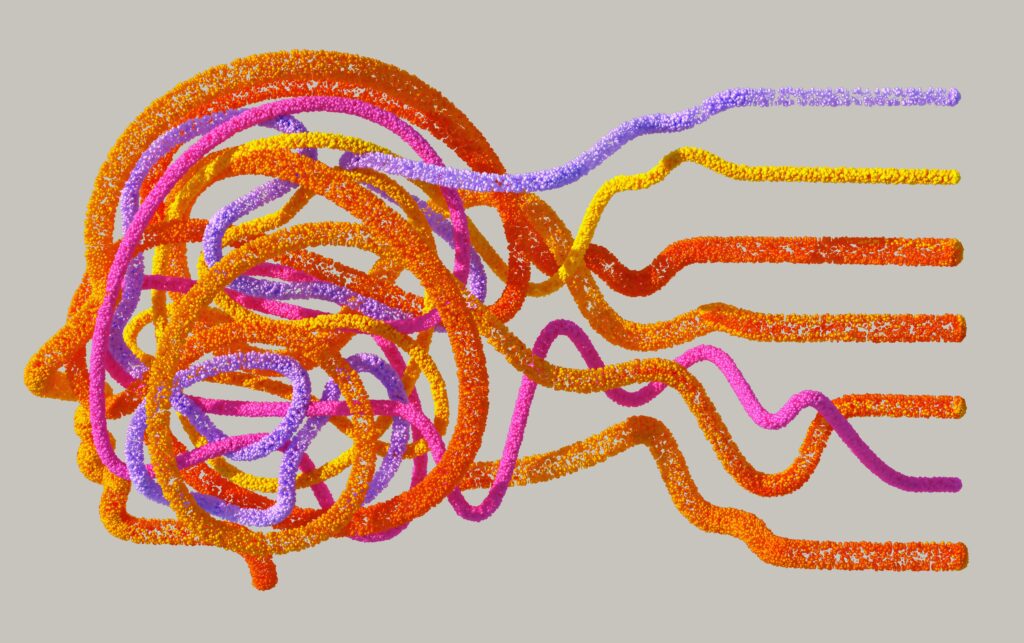
The term twice exceptional, often shortened to 2e, describes people who are both gifted and neurodivergent under our definitions: high intellectual or creative ability alongside a diagnosable condition such as autism, ADHD or a learning disability. First used in gifted education literature in the late 1980s, the term captures something clients describe often: giftedness that masks a neurodivergent condition, or a neurodivergent condition that masks giftedness, so that neither gets properly recognised and support arrives late, if it arrives at all. A gifted adult with undiagnosed ADHD may spend years assuming their inconsistent output reflects laziness rather than a genuine difference in how their attention is organised. A gifted autistic adult may mask so effectively that neither the giftedness nor the autism gets named until well into adulthood, sometimes not until their own child is assessed.
Kazimierz Dabrowski’s work on overexcitability offers a useful illustration of the territory between our two terms. Dabrowski, working from the 1960s onward, described heightened sensitivity across five domains, including intellectual, emotional and sensory processing, common among gifted individuals though not universal among them. Overexcitability isn’t a diagnosis. It describes a manner of experiencing the world with unusual intensity, which is exactly the kind of cognitive profile our definition of neurodiversity is built to describe: distinct from, though sometimes overlapping with, the diagnosable conditions covered by neurodivergent.
Not Everyone Uses These Words the Same Way, and That’s Fine
We’re aware this framing sits against more established usage within parts of the neurodiversity movement, where neurodivergent is applied broadly and without requiring formal diagnosis, and where some writers argue giftedness itself qualifies as a form of neurodivergence given its association with asynchronous development. We’re not arguing that usage is wrong. We’re offering ours because it does specific work for the clients we see, and we’d encourage anyone reading elsewhere to check how a given writer or organisation is using these words before assuming they mean what we mean.
The word divergent carries different weight for different people, too. Some clients find it validating: it names something real, takes their experience seriously and opens the door to formal recognition and support they’ve spent years being denied. Others find it uncomfortable, as though a way of thinking that has never caused them distress is being reframed as a disorder they don’t feel they have. Both reactions are reasonable, and both come up regularly in our work. A term that helps one client feel taken seriously can make another feel pathologised, and we’d rather hold two precise words than force one word to do work it isn’t suited for.
What This Means For You
If you come to us with a diagnosis already in hand, autism, ADHD, dyslexia or another neurodivergent condition, we’ll use that term for exactly what it is: a clinical picture with a defined history and, usually, a set of assessments behind it.
If you come to us without one, still working out whether your mind fits any of these categories, or certain that it doesn’t and never will, we won’t require you to adopt clinical language before we can take your experience seriously. We’ll talk about your cognitive profile, your neurotype, the particular shape of your thinking, using neurodiversity as the broader, non-diagnostic term it’s meant to be. Whether that exploration eventually leads towards a formal assessment is your decision, not a prerequisite for the work.
And if you sit at the intersection, gifted and autistic, gifted and ADHD, or any other combination, we’ll use twice exceptional, because that term already exists for precisely this overlap and does the job better than either word alone.
In Practice
None of this changes how we work with you. Whether your thinking has a diagnosis attached to it or not, our approach starts from the same place: your mind isn’t a deviation from a standard that needs correcting. It has its own logic, and our work is to help you build a life that fits it, not the other way round.
Frequently Asked Questions
What’s the difference between neurodiversity and neurodivergent?
At Storm’s Edge Therapy, neurodivergent describes a diagnosable condition, such as autism, ADHD, dyslexia or dyspraxia. Neurodiversity describes a broader range of cognitive profiles, including giftedness, that doesn’t require any diagnosis at all.
Do I need a diagnosis to start therapy with you?
No. Many clients arrive with a self-recognised difference in how they think and no formal diagnosis, and that’s a legitimate starting point for the work. A diagnosis can come later, or not at all, without changing how we approach therapy with you.
What does twice exceptional mean?
Twice exceptional, often shortened to 2e, describes someone who is both gifted and neurodivergent under our definitions, for example gifted and autistic, or gifted with ADHD. Each part is often masked by the other, which can delay recognition of both well into adulthood.